INTERBETON, with a steadfast commitment to sustainability and technological excellence, offers INTERTHERM to the Greek market—a premium solution for underfloor heating systems. INTERTHERM is a high-performance, ready-mixed screed produced in INTERBETON’s fully automated batching plants. It is specially designed to act as the intermediate layer between heating pipes and the final floor finish. Thanks to its high thermal conductivity, structural stability, and long-term performance, INTERTHERM delivers comfort, durability, and energy efficiency in every project.
INTERTHERM incorporates INTERBETON’s experience and expertise in specialized concrete solutions. It focuses not only on technical performance but also on the development of a sustainable, safe, and energy-efficient living environment, meeting the increasing demands of modern construction for quality and longevity.
INTERTHERM is the smart choice for any underfloor heating system. With precise manufacturing, energy efficiency, and long-term reliability, it offers a modern solution that enhances thermal comfort and supports sustainable building—from the first layer.
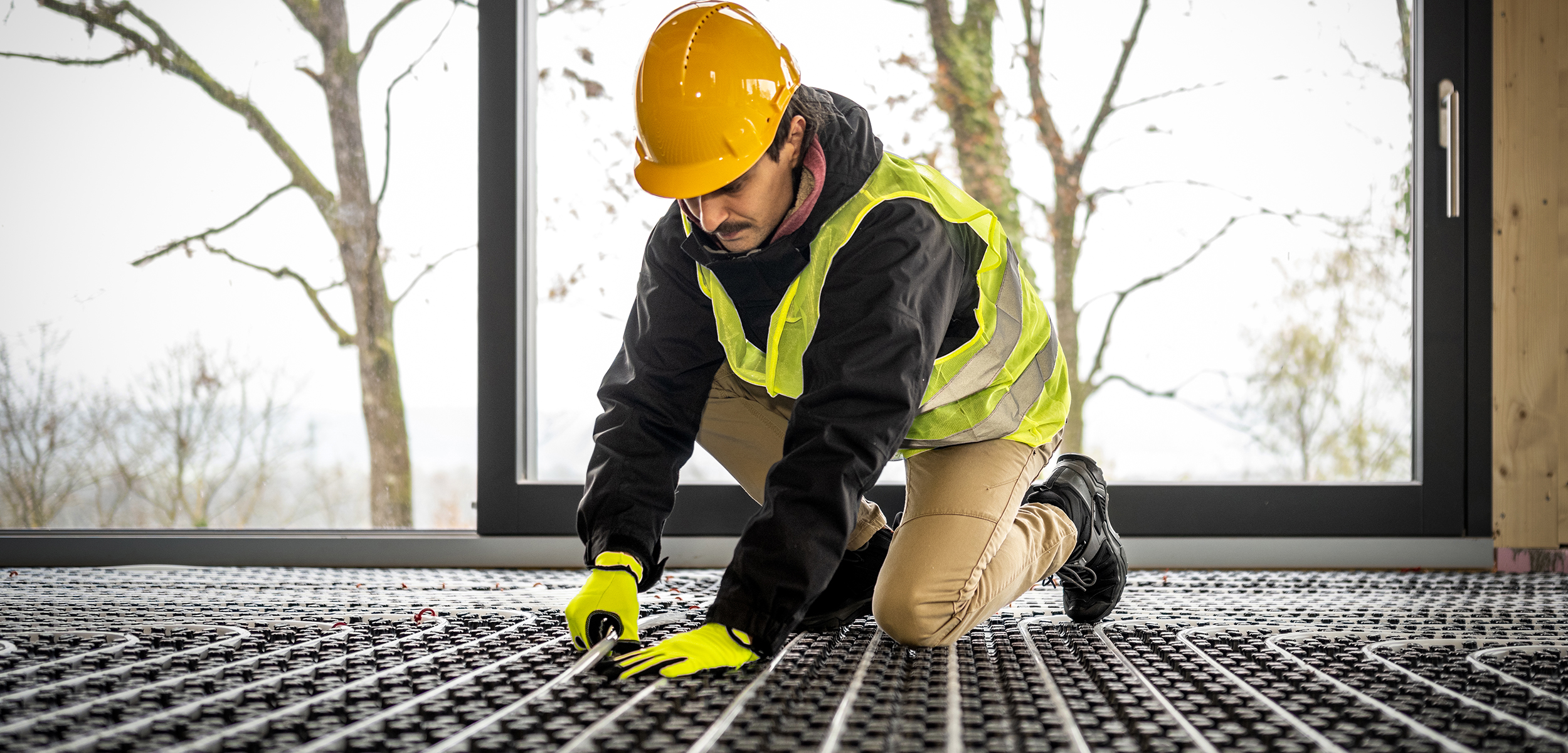
INTERTHERM is a ready-mix, fiber-reinforced C25/30 screed (fast or normal setting), produced in state-of-the-art ISO-certified INTERBETON plants, with uniform quality and controlled raw material dosing bearing CE marking.
• Strength class: C25/30, reinforced with appropriate polypropylene fiber dosage
• Available as C25/30 Fast-Setting and C25/30 Normal-Setting
• Characteristic compressive strength (sub): 30 MPa
• Flexural strength: 3 MPa
• Thermal conductivity (EN 12664): λ > 1.15 W/m.K
• Density: 2,300 kg/m.
• Minimum application thickness: 5 cm
• Maximum application thickness: 7 cm
• Minimum drying time: 15 days (after curing)
• Compliant with DIN 18560 for floor screeds
• High pumpability

INTERTHERM is designed to support the energy efficiency and long-term sustainability of any underfloor heating system.
• High thermal conductivity ensures rapid and uniform heat delivery, reducing system energy consumption
• Stable composition and industrial production help lower both operational energy use and the overall environmental footprint
• Reduced need for repairs or interventions strengthens long-term functional durability
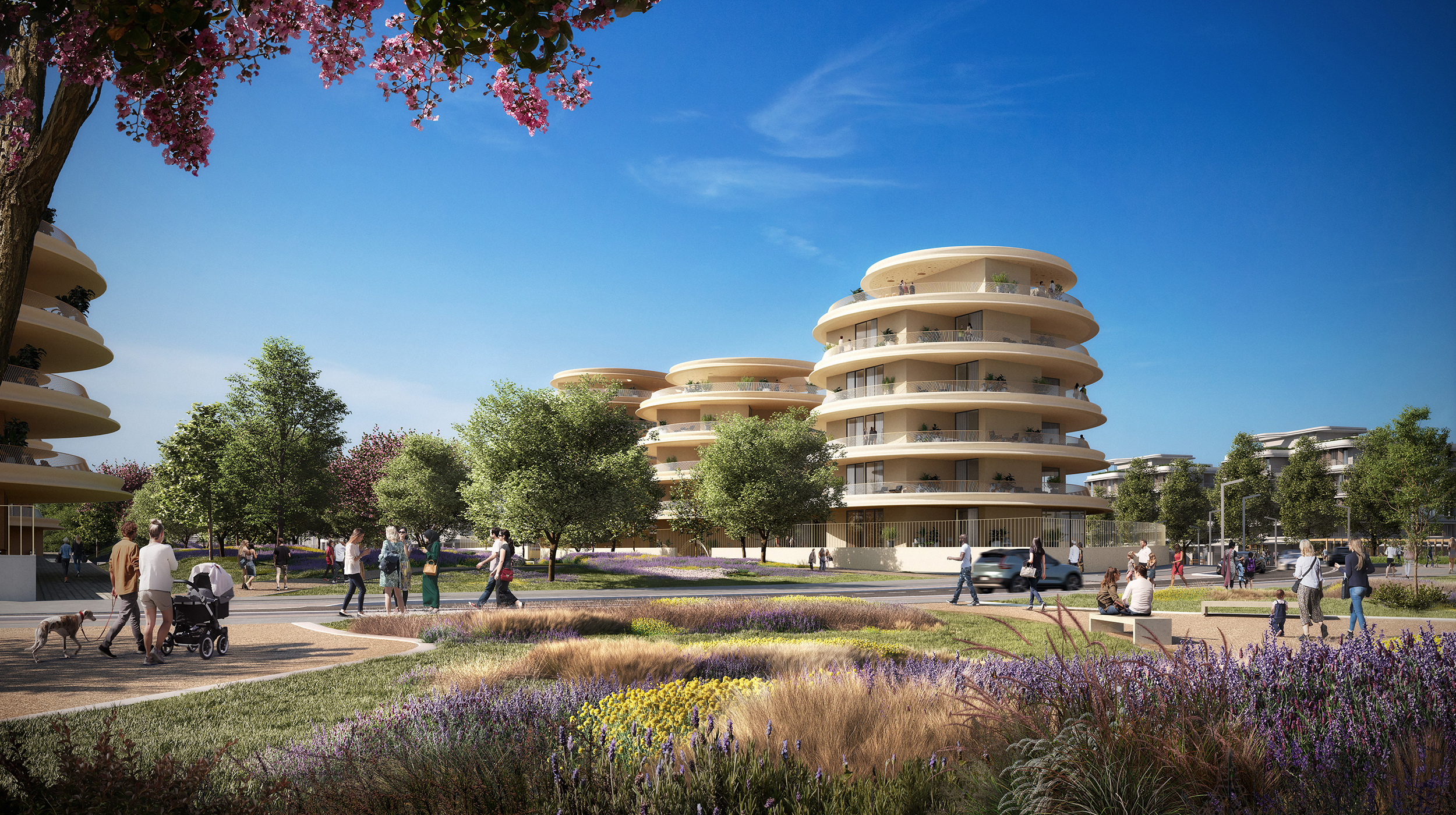
Through its state-of-the-art ready-mix concrete plant located within the Metropolitan Park, INTERBETON supplies a substantial part of the works being carried out at The Ellinikon. These include residential developments, such as The Cove Residences, The Cove Villas, the Riviera Tower, and the Little Athens neighborhood.
Read More